Imagine a tiny animal, smaller than your thumb, that helps grow the apples in your lunchbox, the strawberries in your cake and the tomatoes in your salad. That animal is a bee! Bees are some of the most important animals on Earth, and humans have loved and looked after them for thousands of years. Let us meet the busy honeybee.
A city in a box: life inside the hive
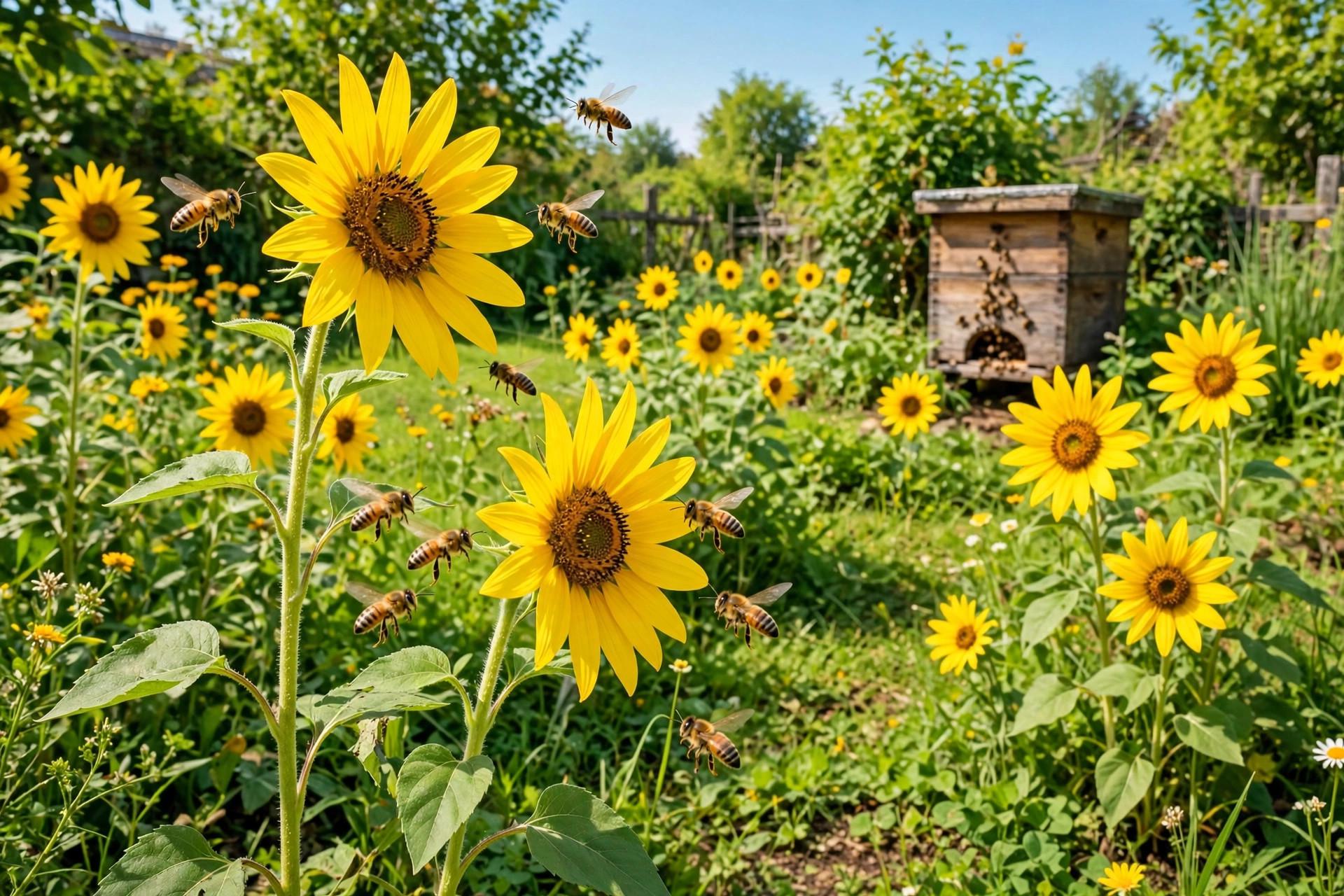
Honeybees live together in a big family called a colony, and a colony can have tens of thousands of bees! They live in a hive — a box or hollow tree filled with wax honeycomb. Every bee in the hive has a job.
There is one queen bee. She is bigger than the other bees, and her job is to lay eggs — thousands of them. The worker bees are all female, and they do almost everything else: they clean the hive, feed the baby bees, guard the entrance, and fly out to collect food. The male bees are called drones, and their job is different — they help the colony make new queens.
A worker bee changes jobs as she grows older. First she cleans the hive, then she feeds the babies, then she guards the door, and finally she becomes a forager, flying out to find flowers. A forager bee may visit thousands of flowers in a single day!
The waggle dance
How does a bee tell her sisters where the flowers are? She dances! When a forager bee finds a good patch of flowers, she flies home and performs a special dance on the honeycomb, called the waggle dance. The dance tells the other bees which direction to fly and how far to go. It is like giving directions with your body instead of words.
Scientists were amazed when they discovered the waggle dance. It is one of the cleverest forms of communication in the whole animal kingdom — and it was discovered by watching bees very carefully.
How bees make honey
Bees make honey from nectar, the sweet juice inside flowers. A forager bee drinks nectar with her long tongue and carries it home in a special stomach. Back at the hive, she passes it to other bees, who chew it and fan it with their wings to dry it out. The thick, golden honey is then stored in wax honeycomb cells, which the bees seal with a wax lid.
Honey is food for the bees, especially in winter when there are no flowers. A colony stores enough honey to survive the cold months. And honey is so special that it can last for a very, very long time without going bad. People have found pots of honey in ancient tombs that were still good to eat after thousands of years!
Bees help plants make food
Bees do something even more important than making honey: they pollinate plants. When a bee visits a flower to drink nectar, tiny yellow dust called pollen sticks to its fuzzy body. When the bee flies to the next flower, some of that pollen rubs off — and that helps the plant make seeds and fruit.
Without pollination, many plants could not make fruit at all. Apples, oranges, strawberries, tomatoes, cucumbers, pumpkins and almonds all need bees (or other pollinators) to grow. In fact, about one in every three bites of food we eat exists because a pollinator did its job. That is why people say that bees feed the world!
Beekeepers: friends of the bees
People who look after bees are called beekeepers. Beekeepers wear special white suits and veils to protect themselves, and they use gentle smoke to calm the bees while they check the hive. They make sure the bees are healthy, have enough space, and have plenty of food.
In return, the bees share some of their honey with the beekeeper — but a good beekeeper always leaves enough honey for the bees themselves. Beekeepers also collect beeswax, which is used to make candles, lip balm and polish.
People have kept bees for thousands of years. Ancient Egyptians kept bees in clay hives, and honey was so precious that it was used as medicine and even as money!
Why bees need our help
Sadly, bees are in trouble. Their homes are disappearing as wildflower meadows are turned into farms and towns, and some chemicals used on crops can harm them. When bees disappear, plants cannot make as much fruit, and that is bad news for everyone.
But there is good news: you can help bees! Plant flowers that bees love, like lavender, sunflowers and wildflowers. Leave a shallow dish of water with pebbles in it so bees can drink safely. And if you see a tired bee on the ground, you can give it a tiny drop of sugar water to help it recover its strength.
A sting is a last resort
Many people are scared of bee stings, but bees do not want to sting you. A honeybee only stings when it feels scared or when it thinks its hive is in danger. A honeybee worker dies after it stings, so it only does it as a very last resort. If you stay calm, move slowly and do not swat at a bee, it will almost always leave you alone. The bee is far more interested in flowers than in you!
Fun facts about bees
- A colony of honeybees can have tens of thousands of bees.
- The waggle dance tells other bees where to find flowers.
- Honey can last for a very, very long time without going bad.
- About one in every three bites of food we eat exists because of pollinators like bees.
- Beekeepers have looked after bees for thousands of years.