Long ago, before cars, trains or aeroplanes, there was a way to travel far and fast: on the back of a horse. Horses have been friends and helpers of humans for thousands of years, and they changed the world. They carried messages across whole countries, helped farmers grow food, and pulled heavy loads that no person could move alone. Even today, in a world full of machines, horses are still loved, admired and needed.
How the friendship began
Wild horses once roamed the wide grasslands of Central Asia in great herds. Thousands of years ago, people began to tame them. At first, horses were kept for their milk and meat, just like other farm animals. But people soon discovered something wonderful: a horse could be ridden, and a ridden horse could carry a person much further and faster than walking.
Once people learned to ride, the world became smaller. Messengers on horseback could carry news from one town to another in a single day. Traders could travel to faraway markets. Farmers could plough bigger fields. The horse became the engine of the ancient world — long before engines were invented!
A body built for running
A horse's body is made for speed and strength. Its long, strong legs can carry it across fields and over fences. Its hooves are tough, like built-in shoes, and a farrier — a person who looks after horses' feet — fits metal horseshoes to protect them on hard ground.
A horse's mane and tail are not just pretty. The mane protects its neck from cold and flies, and the tail swishes away insects like a fly swatter. A horse's ears are very clever: they can turn in different directions to listen, and they show how the horse is feeling. Ears pointing forward mean the horse is curious. Ears flattened back mean it is annoyed or scared.
Horses have very good eyesight, and they can see almost all the way around their bodies. That is because, in the wild, horses are prey animals — animals that other animals hunt. They need to spot danger quickly and run away fast.
Sleeping standing up
Here is one of the strangest things about horses: they can sleep standing up! A horse's legs have a special locking system that lets it doze while standing, without falling over. This helped wild horses stay safe — if danger appeared, they could wake up and run away at once, without wasting time getting up.
But horses do lie down too. For a deep sleep, a horse needs to lie flat on its side, just like we do. A horse that feels safe and comfortable will lie down in its stable or field and enjoy a proper rest.
Talking horse: neighs, nickers and ears
Horses talk to each other — and to us — in many ways. A loud neigh is a call to a friend who is far away. A soft nicker is a friendly hello. A snort can mean excitement or a warning. Horses also talk with their bodies: a relaxed horse has soft eyes and loose lips, while a worried horse holds its head high and tenses its muscles.
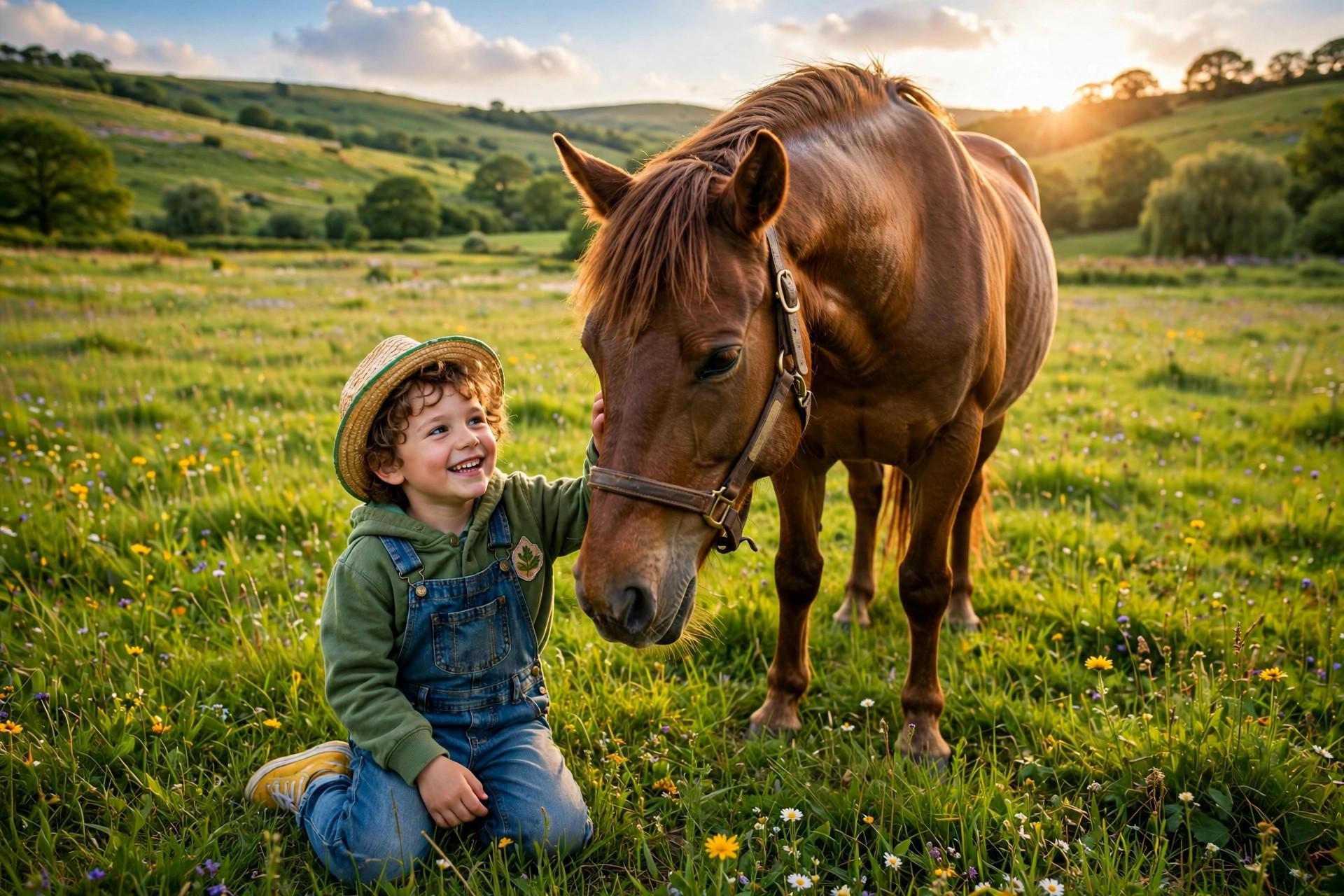
If you spend time with a horse, you will learn to read its feelings. A horse that nudges you gently with its nose is saying hello — and maybe asking for a treat!
Horses at work
Throughout history, horses have done almost every job you can imagine. They pulled ploughs in the fields, carried soldiers into battle, pulled carriages through city streets, and delivered the post. In some places, horses still work today: police horses help keep crowds safe, and horses carry rangers through forests and mountains where cars cannot go.
Horses also help people feel better. Riding a horse can help children and adults who find it hard to walk or talk, because the gentle movement of the horse helps their bodies and minds. These special helpers are called therapy horses, and they bring joy to many people.
Looking after a horse
A horse is a big responsibility. Horses need a lot of food — mainly grass and hay — and fresh water every day. They need a clean, dry stable or field to live in, regular grooming to keep their coats shiny, and a vet and farrier to check their health and hooves. Horses also need exercise and company, because they are herd animals and feel lonely on their own.
In return, a horse gives its owner friendship, fun and adventure. Riding a horse across an open field, feeling the wind in your face, is one of the most exciting feelings in the world.
The horse in our lives today
Today, most of us do not need a horse to travel or farm. But horses are still everywhere: in sports like racing and show jumping, in films and books, and in riding schools where children learn to ride. The horse reminds us of a time when humans and animals worked together to build the world we live in.
The friendship between horses and humans is thousands of years old — and it is still going strong. Next time you see a horse, give it a gentle pat and say thank you. It helped build our world.
Fun facts about horses
- Horses have been friends and helpers of humans for thousands of years.
- A horse can doze while standing up, thanks to a special locking system in its legs.
- Horses can see almost all the way around their bodies.
- A horse's ears show how it is feeling — forward means curious, flat back means annoyed.
- Therapy horses help children and adults feel better and learn new skills.