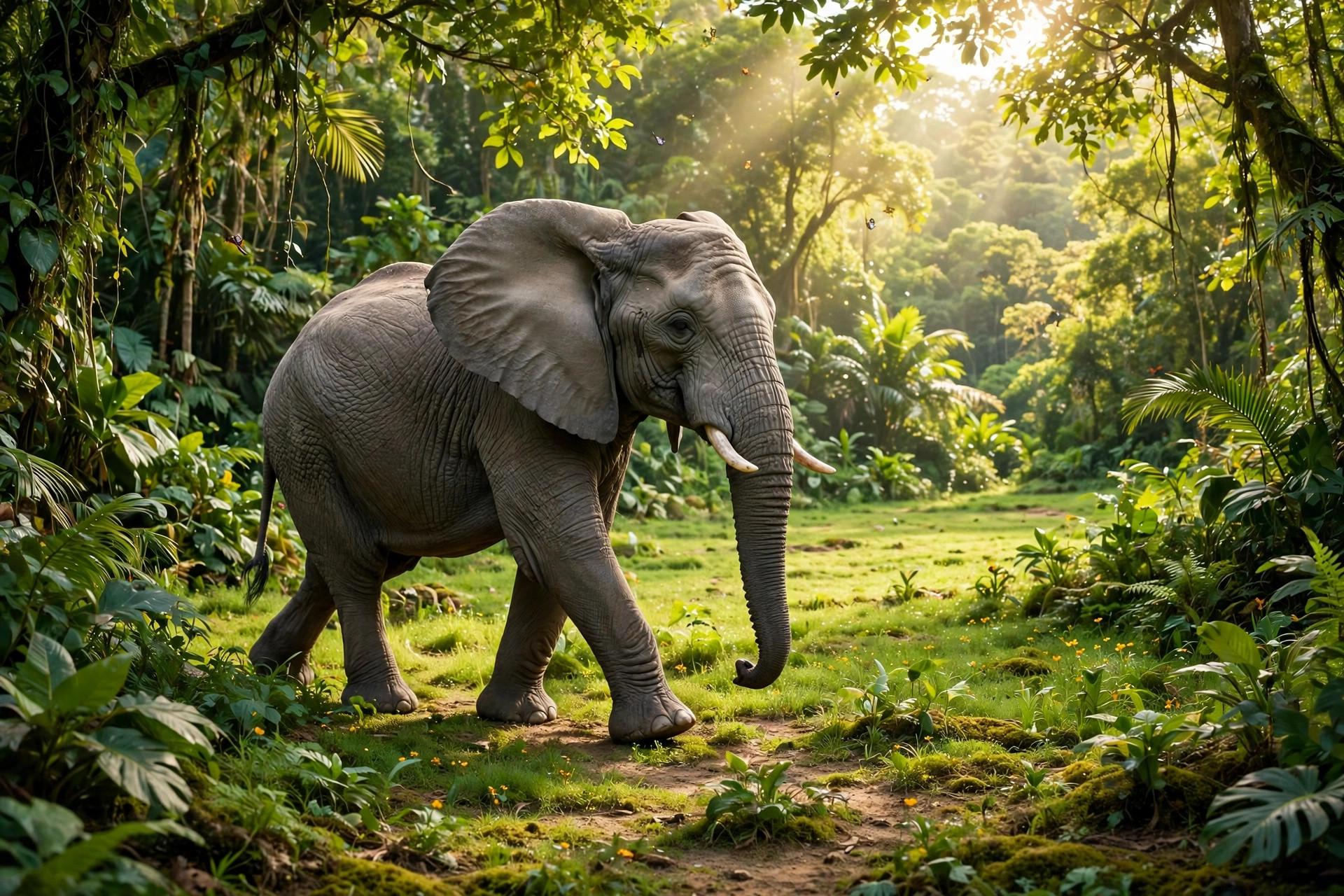
Imagine an animal as tall as a house, as heavy as a school bus, and as gentle as a grandmother. That is an elephant! Elephants are the largest land animals on Earth, and they are also some of the cleverest and kindest animals in the wild. Let us meet them.
Two kinds of elephants
There are two main kinds of elephants. African elephants live in Africa and are the biggest of all, with huge ears shaped a little like the map of Africa. Asian elephants live in Asia, in countries like India and Thailand. They are a little smaller, with smaller ears and smoother skin.
You can tell an African elephant from an Asian elephant by looking at its ears and its back. African elephants have very large ears and a dipped back, while Asian elephants have smaller ears and a more rounded back. Both kinds have long trunks and strong tusks.
The amazing trunk
An elephant's trunk is one of the most amazing tools in the whole animal world. It is really a very long nose and upper lip joined together, and it is filled with tens of thousands of tiny muscles. That makes it both super strong and super gentle.
With its trunk, an elephant can pick up a single small leaf — or lift a heavy fallen tree. It can suck up water and pour it into its mouth for a drink, or spray water over its back like a shower. It can smell food from far away, pick fruit from a high branch, and even hug another elephant. Baby elephants have to learn how to use their trunks, and at first they trip over them and swing them around clumsily — just like a baby learning to walk!
Big ears and clever cooling
Elephants do not sweat like we do, so their big ears help them stay cool. An elephant flaps its ears like fans, and the blood flowing through the thin skin of the ears cools down before it flows back into the body. On a very hot day, an elephant might also spray itself with water or roll in cool mud.
Mud baths are not just fun — they are useful too. The mud dries on the elephant's skin and works like sunscreen and insect cream, protecting it from the hot sun and from biting flies.
A memory that never forgets
People say that elephants never forget, and scientists have found that it is mostly true! Elephants have wonderful memories. They remember where to find water during dry seasons, even if they have not visited a water hole for many years. They remember old friends, and they can recognise other elephants they have not seen for a long time.
Elephant families are led by the oldest female, called the matriarch. She is the wisest elephant in the group because she remembers the most: where the water is, which paths are safe, and where the best food grows. The whole herd follows her, and when she dies, the next oldest female takes her place.
A family that sticks together
Elephants live in close families. A herd is usually made of mothers, daughters, sisters and their babies. The females stay together for their whole lives. Male elephants leave the herd when they grow up and often live alone or in small groups of males.
Baby elephants are loved and protected by everyone. When a baby is born, the whole herd gathers around to welcome it, touching it gently with their trunks. If a baby elephant cries out, the adults come running. Aunts and older sisters help the mother look after the little one, and the baby stays close to its mother for many years.
Elephants talk to each other in many ways. They trumpet loudly when they are excited or alarmed, and they make deep rumbling sounds that travel through the ground. Some of their rumbles are so low that human ears cannot hear them at all — but other elephants can feel them through their feet!
What do elephants eat?
Elephants are plant-eaters, which means they only eat plants. They munch on grass, leaves, fruit, bark and roots. Because they are so big, they need a huge amount of food every day — an adult elephant can eat more than 100 kilograms of plants in a single day! That is about as heavy as two grown people.
To find all that food, elephants walk for many kilometres every day. As they walk, they knock down trees, dig water holes and spread seeds in their dung, which helps new plants grow. That is why elephants are called the gardeners of the forest — they help the whole forest stay healthy.
Tusks and teeth
Elephants have long, curved tusks, which are actually very long teeth. They use them to dig for water, strip bark from trees and defend themselves. Sadly, tusks are also the reason elephants are in danger, because some people hunt elephants for their tusks. Today, many countries protect elephants by law, and rangers work hard to keep them safe.
Elephants also have special teeth for grinding plants. Their big flat teeth wear down over time, and new ones grow to replace them. An elephant gets several sets of teeth during its life.
Why elephants need our help
Elephants need a lot of space to live, and their homes are shrinking as forests are cut down and land is turned into farms. When elephants and people live close together, they can come into trouble. The good news is that many people are working to protect elephants — creating safe parks, planting corridors of forest so elephants can move safely, and teaching everyone how wonderful these gentle giants are.
You can help elephants by learning about them, sharing their story, and supporting the parks that keep them safe. The gentle giants have walked the Earth for millions of years. With our help, they will keep walking for millions more.
Fun facts about elephants
- Elephants are the largest land animals on Earth.
- An elephant's trunk has tens of thousands of muscles and can pick up a single leaf.
- Elephants flap their big ears to cool down, like fans.
- The oldest female, the matriarch, leads the herd with her great memory.
- Elephants can talk to each other with rumbles so low that humans cannot hear them.