Have you ever heard a lion roar? It is one of the loudest sounds in the whole animal kingdom! A lion's roar can be heard from many kilometres away, rolling across the grasslands like thunder. Lions are called the kings of the savanna — but what makes them so special? Let us find out.
Where do lions live?
Lions live in Africa, south of the Sahara desert, on wide open grasslands called savannas. A small group of lions, called Asiatic lions, also lives in the Gir Forest in India. Long ago, lions lived in many more places, including parts of Europe and Asia. Today, most wild lions live in Africa, in protected parks where rangers keep them safe.
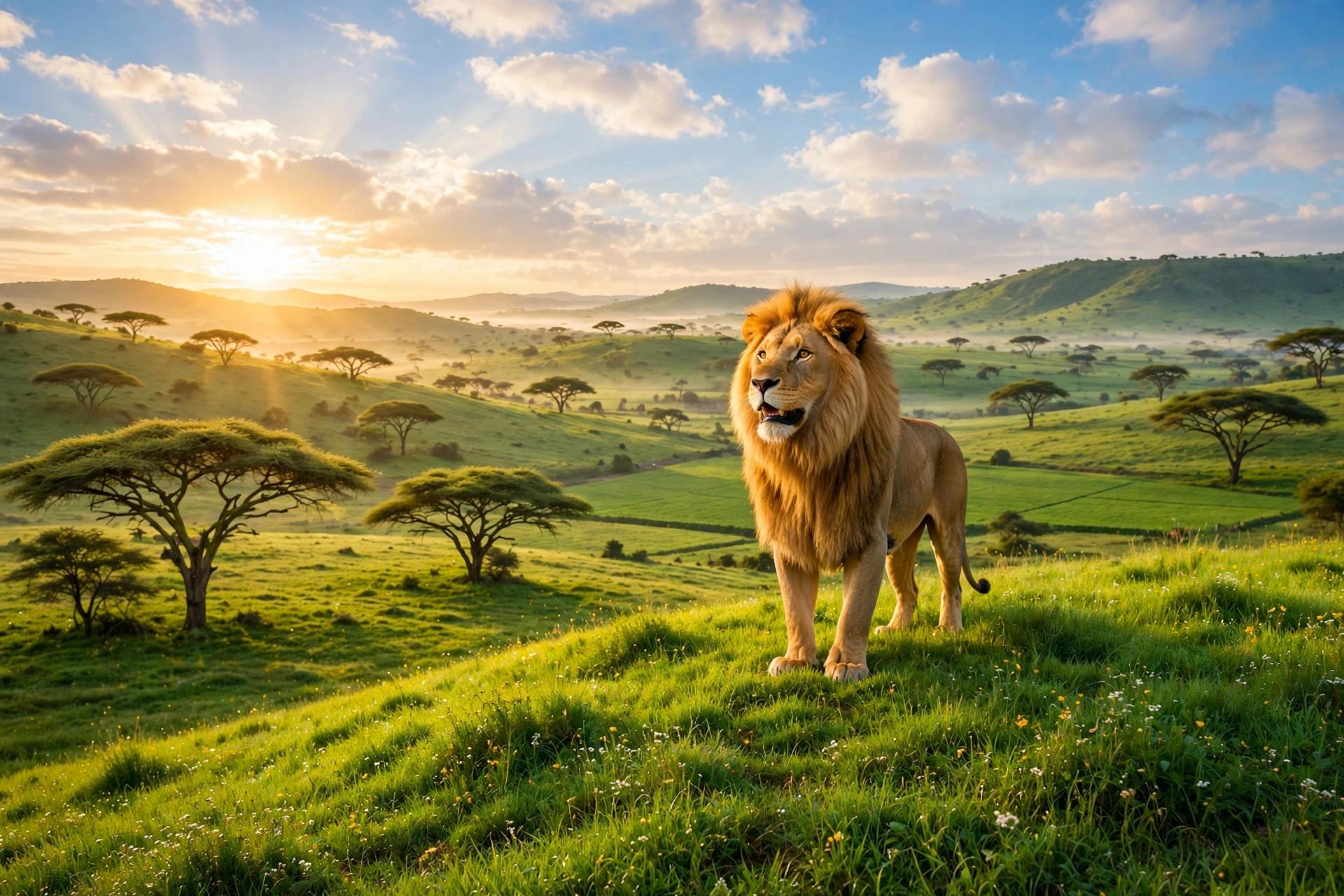
A savanna is the perfect home for a lion. The tall golden grass hides them while they hunt, and big open spaces let them see far across the land. Acacia trees give shade from the hot sun, and herds of zebras, antelopes and wildebeest graze nearby — that is dinner for a lion family!
Lions live in a family called a pride
Lions are very special among big cats because they live together in family groups called prides. A pride usually has several lionesses (female lions), their cubs, and one or two adult male lions.
The lionesses are the heart of the pride. They are sisters, mothers and daughters, and they stay together for their whole lives. They hunt together, raise their cubs together, and look after one another. The male lions protect the pride and its land from other lions.
Lion cubs grow up in a big, noisy family. They play-fight with their brothers and sisters, pounce on their mother's tail, and practise stalking each other through the grass. All that play is really hunting practice — one day, they will need those skills to catch their own food.
The magnificent mane
Male lions are easy to spot because of their big, fluffy manes. The mane is a ring of long hair around the head, neck and shoulders, and it makes the lion look much bigger and stronger than he really is. That is useful! When two male lions meet, the one with the bigger, darker mane often wins without a fight, because he looks so powerful.
Lionesses do not have manes. Their smooth heads and tawny coats help them hide in the tall grass when they hunt. A lion's coat is the colour of dry grass, which is perfect camouflage on the savanna.
The mighty roar
A lion's roar is not just loud — it is a message. Lions roar to say "this land is mine" and to call their family back together. Each lion's roar sounds a little different, so lions can recognise each other just by listening. A roar can travel for many kilometres across the flat savanna, especially at night when the air is cool and still.
Lions also talk in quieter ways. They purr softly when they are happy, just like a pet cat — but much louder! They rub heads with each other to say hello, and mothers call their cubs with soft grunts.
How lions hunt
Lionesses do most of the hunting, and they are brilliant at teamwork. They spread out in the tall grass and creep slowly towards a herd of zebras or antelopes, staying low and quiet. Then, when they are close enough, they burst into a fast chase. A lion can run very fast for a short distance, but it cannot keep running for long, so the hunt must be quick.
Not every hunt works. In fact, most hunts fail, and the lions go hungry. But when a hunt succeeds, the whole pride eats together. Lions eat a lot at one meal, then rest and sleep for a very long time.
The sleepiest kings
Here is a funny secret about the king of the savanna: lions sleep for most of the day! A lion can sleep for up to 20 hours in a single day. They sleep in the shade during the hot afternoon and do most of their hunting at night or in the cool early morning. When you see lions lying in a pile, all tangled together in the sun, they are not being lazy — they are saving their energy for the night's work.
Lion cubs
Lion cubs are born with spots on their fur, which fade as they grow up. A mother lion hides her tiny cubs in thick grass for the first few weeks of their lives, and she moves them to new hiding places to keep them safe. When the cubs are old enough, she brings them to meet the pride.
The whole pride helps to look after the cubs. Aunties babysit while the mothers hunt, and cubs are allowed to drink milk from any mother in the pride. It is a true team effort — raising a lion takes a whole family.
Why lions need our help
Sadly, there are far fewer lions in the wild today than there were long ago. Their grassland homes are shrinking as farms and towns grow, and sometimes lions come into trouble with people when they hunt farm animals. That is why rangers and wildlife parks work so hard to protect them. In protected areas, lions can live safely, and their numbers can grow again.
You can help lions too. Learning about them, telling your friends, and supporting wildlife parks all make a difference. The king of the savanna has ruled the grasslands for thousands of years — with our help, he will keep roaring for thousands more.
Fun facts about lions
- A group of lions is called a pride, and a baby lion is called a cub.
- Lions are the only big cats that live in family groups.
- A lion's roar can be heard from many kilometres away.
- Lionesses do most of the hunting, while males guard the pride.
- Lions can sleep for up to 20 hours a day!